
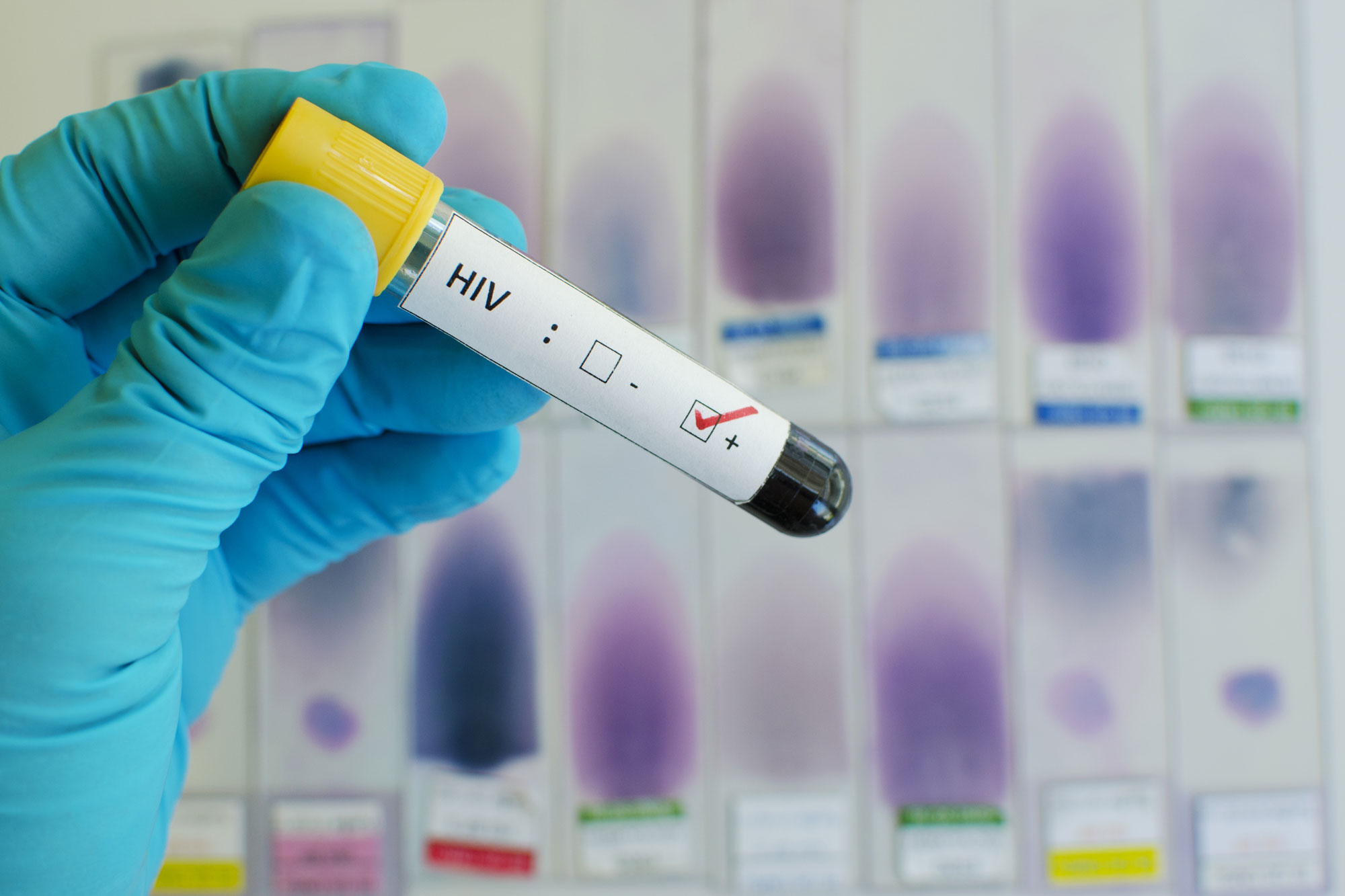
HIV & AIDS
AIDS occurs at the most advanced stage of infection by HIV

Acquired Immunodeficiency Syndrome (AIDS) occurs at the most advanced stage of infection by Human Immunodeficiency Virus (HIV). HIV can be transmitted via the exchange of body fluids from people living with HIV, including blood, breast milk, semen, and vaginal secretions.
HIV can also be transmitted to a child during pregnancy and delivery. Typically, people cannot become infected with HIV through ordinary day-to-day contact such as kissing, hugging, shaking hands (1).
HIV attacks the infection-fighting CD4+ T-lymphocytes of the immune system. Without treatment, HIV infection advances, getting worse over time. There are 3 stages of HIV infection: Acute HIV Infection, Chronic HIV Infection and AIDS.
The term “AIDS” refers to the final, most severe stage of HIV infection. Because HIV has severely damaged the immune system, the body cannot fight off opportunistic infections (2).
Symptoms of HIV infection may vary depending on the stage of the infection. During acute infection, patients may present flu-like symptoms. During chronic infection, patients may not feel sick or have any symptoms. If patients with HIV are not properly treated, eventually the virus will weaken the body’s immune system, and the infection will progress to AIDS. Patients with AIDS may present symptoms, such as rapid weight loss, recurring fever, extreme and unexplained tiredness, prolonged swelling of the lymph glands and pneumonia (3).
Based on official data that were collected from the Greek National Public Health Organization (NPHO), 657 new HIV infections were reported in Greece, in 2023. Of these, 506 (77.0%) were males and 151 (23.0%) were females. Totally, 63 cases (9.6%), who were diagnosed with HIV in 2023, had already developed AIDS or progressed to AIDS during that year (4).
Diagnosis is performed by specialized physicians. Diagnosis of HIV infection may require examinations, such as antigen-antibody test, antibody test and nucleic acid test (5). Physicians evaluate the condition of patients. Treatment decisions are made by specialized physicians.
Literature
- World Health Organization, HIV and AIDS, Available at https://www.who.int/news-room/fact-sheets/detail/hiv-aids (22 July 2024)
- National Institutes of Health, The Stages of HIV Infection, Available at https://hivinfo.nih.gov/understanding-hiv/fact-sheets/stages-hiv-infection (Last Reviewed: August 20, 2021)
- HIV.gov, Symptoms of HIV, Available at https://www.hiv.gov/hiv-basics/overview/about-hiv-and-aids/symptoms-of-hiv (Updated: June 15, 2022)
- Εθνικός Οργανισμός Δημόσιας Υγείας, Επιδημιολογική Επιτήρηση HIV/AIDS στην Ελλάδα, Διαγνώσεις έως 31.12.2023, https://eody.gov.gr/wp-content/uploads/2020/07/epidimiologiko-deltio-hiv-2023.pdf
- Mayo Clinic, HIV/AIDS, Available at https://www.mayoclinic.org/diseases-conditions/hiv-aids/diagnosis-treatment/drc-20373531 (Feb 09, 2024)